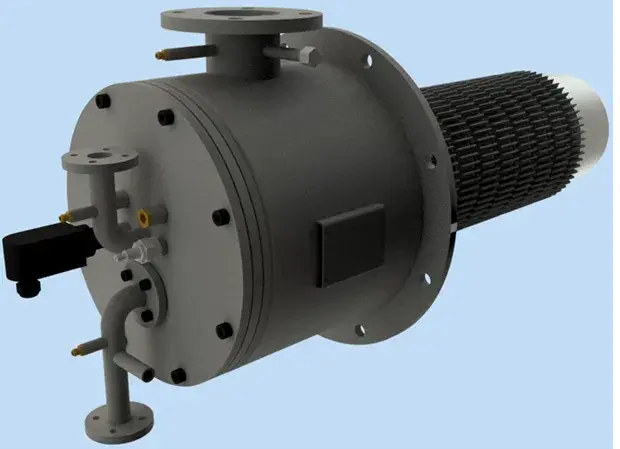

Radiant Tubes Combustion Systems
Radiant tubes are used for applications where the material is in contact with a controlled atmosphere in order to obtain the required heat treatment.
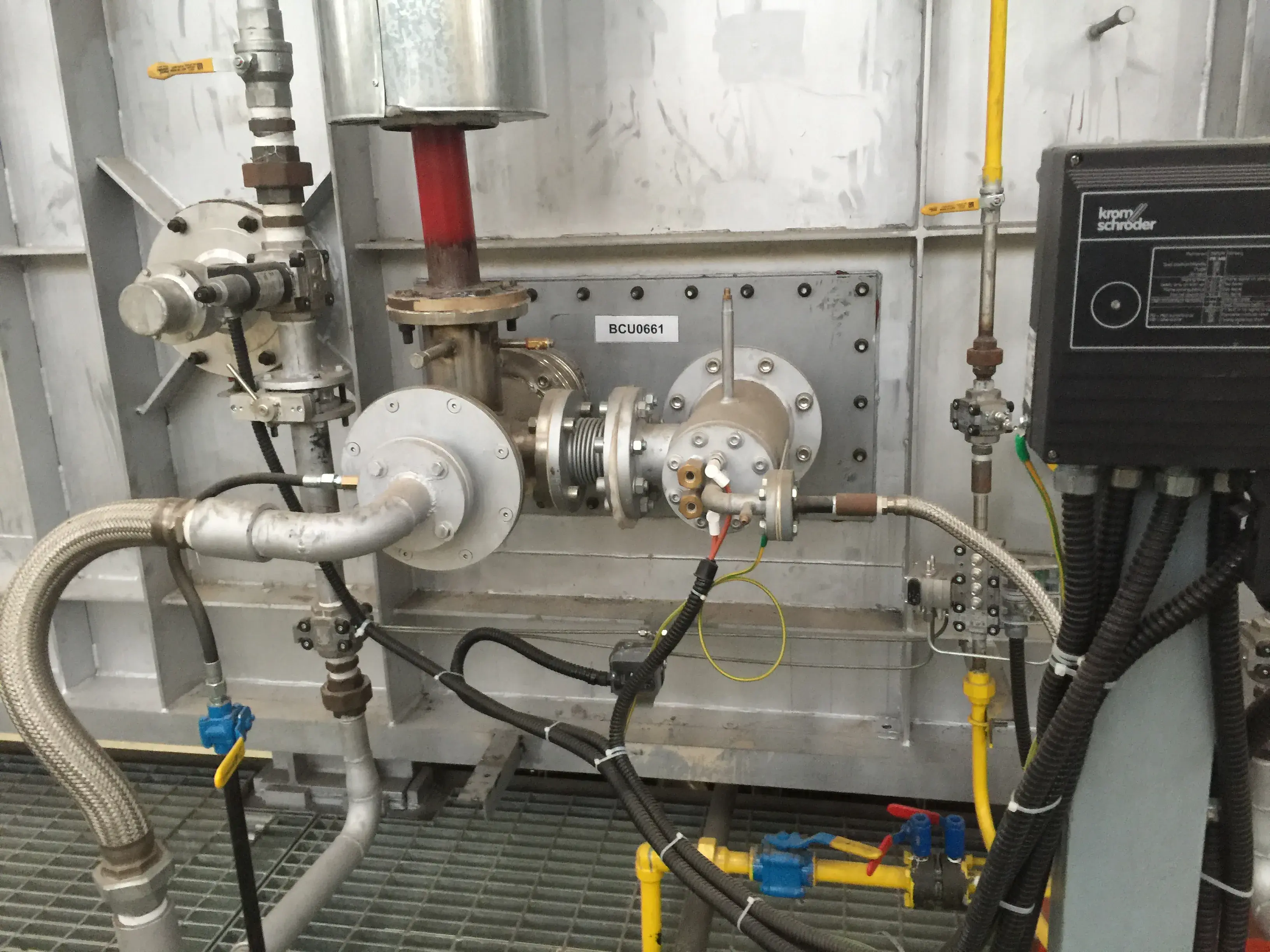
TRK and TRKS are installed respectively in radiant tubes without and with recirculation. The first are combined with an integrated recuperator, which is mounted on the cold leg of the radiant tube while the latter are of self-recuperative type.
Overview
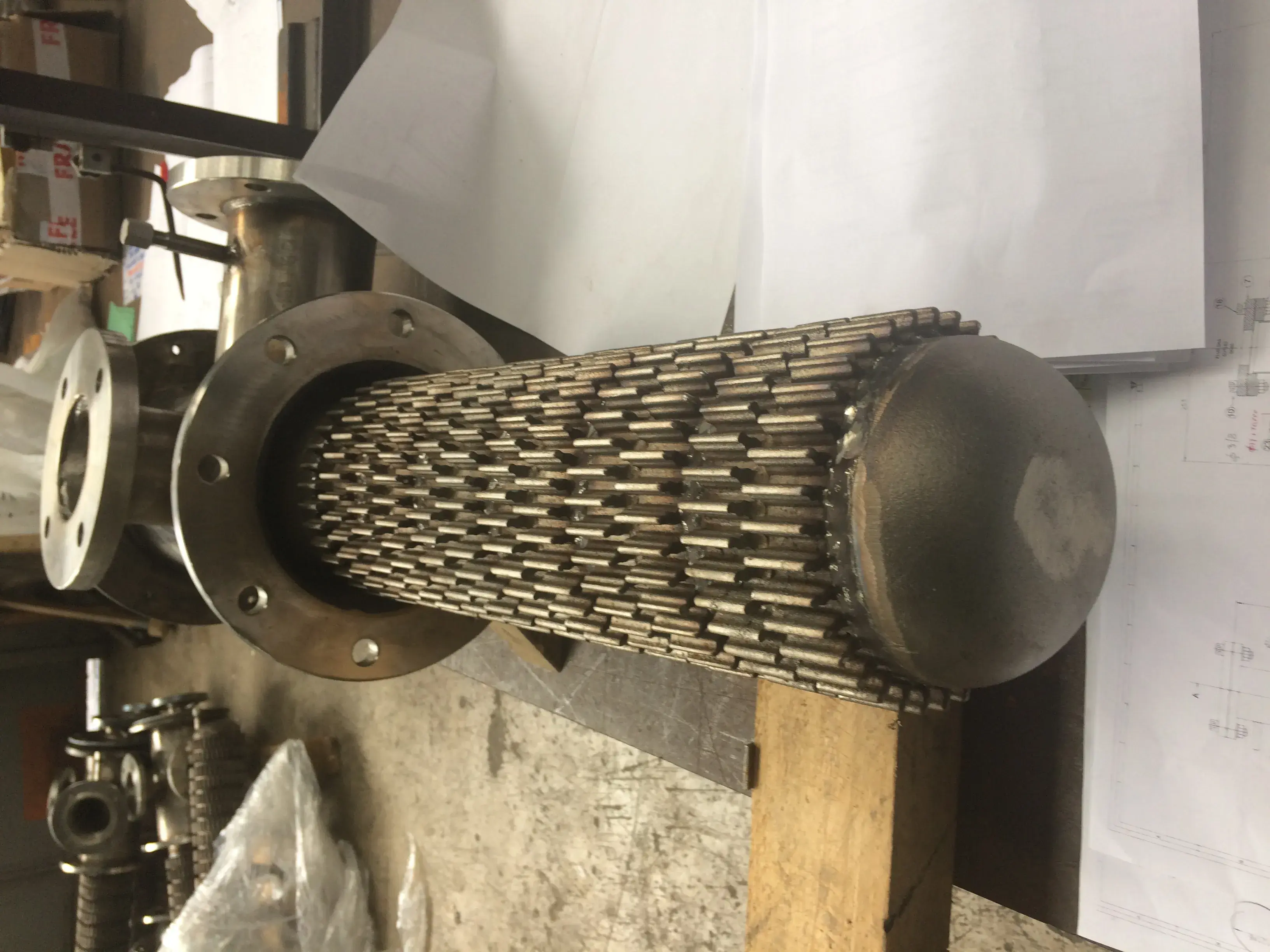
TRK burners are combined with a counter-current heat exchanger which allows to recover heat from the waste gases coming out of the radiant tube. The design of the finned elements and the length of 500 - 600 mm allows for high-efficiency heat recovery.
In order to keep NOx emissions to a minimum, the recuperator is equipped with an internal ejection system which allows part of the fumes to be recirculated inside the combustion air. This design targets to reduce the oxygen content in the air in order to equalize the heat flow distribution along the radiant tube surface. The TRK combustion systems have been developed for U- and W-shaped radiant tubes (non-recirculating radiant tube designs).
TRKS and TRKSX burners are the flame and flameless versions of self-recuperative burners. Thanks to coupled gas and air staging, NOx emissions of the flame versions are always below 200 mg/Nm3 while for flameless version, NOx are further reduced to 80 mg/Nm3.
The high efficiency of the integrated heat exchanger allows to preheat the combustion air at high temperature for reducing the fuel consumption with respect cold air burners.
TRKS and TRKSX burners are suitable for recirculating radiant tubes types (SER, P or 2P). TRKS can be realized in specialty materials for high temperature applications of SER radiant tubes.
Technical Data
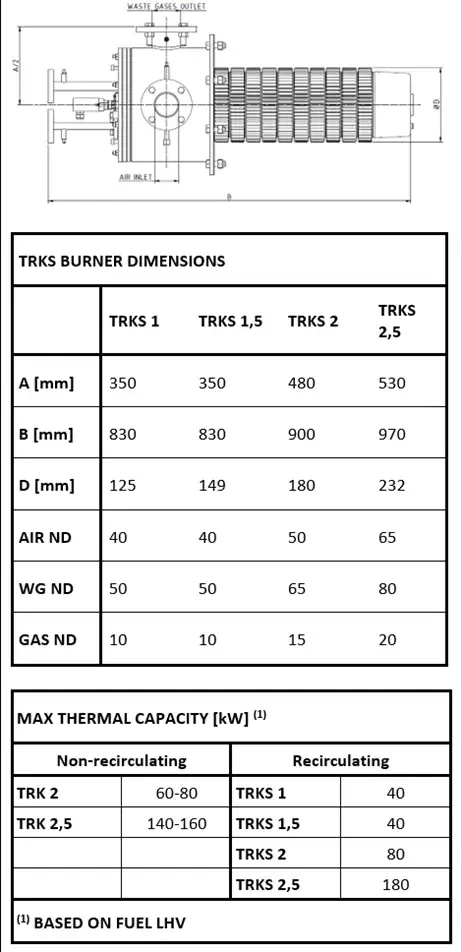
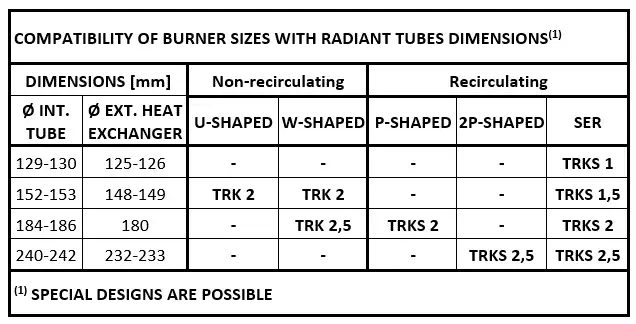
Main technical features:
- Very high heat recovery efficiency (recuperator efficiency up to 75% for non-recirculating radiant tubes and 85% for recirculating radiant tubes versions)
- NOx emissions reduced at very low level thanks to the high internal recirculation of waste gases
- High uniformity of radiant tube temperature (temperature difference < 45°C for recirculating radiant tubes and < 80 - 100°C respectively for non-recirculating designs)
- Direct ignition start-up with dedicated electrode
- Flame detection with UV sensor or elecrtode
Fuels: Natural Gas, COG, LPG (and hydrogen mixtures of them). Turn down: 20%-100%
Typical pressure losses:
- TRK:
air side: 850 daPa (integrated ejector)
fuel side: 500 daPa
- TRKS:
air side 600 daPa
fuel side: 600 daPa
- TRKSX:
air side: 600 daPa
fuel side: 1500 daPa
Innovation
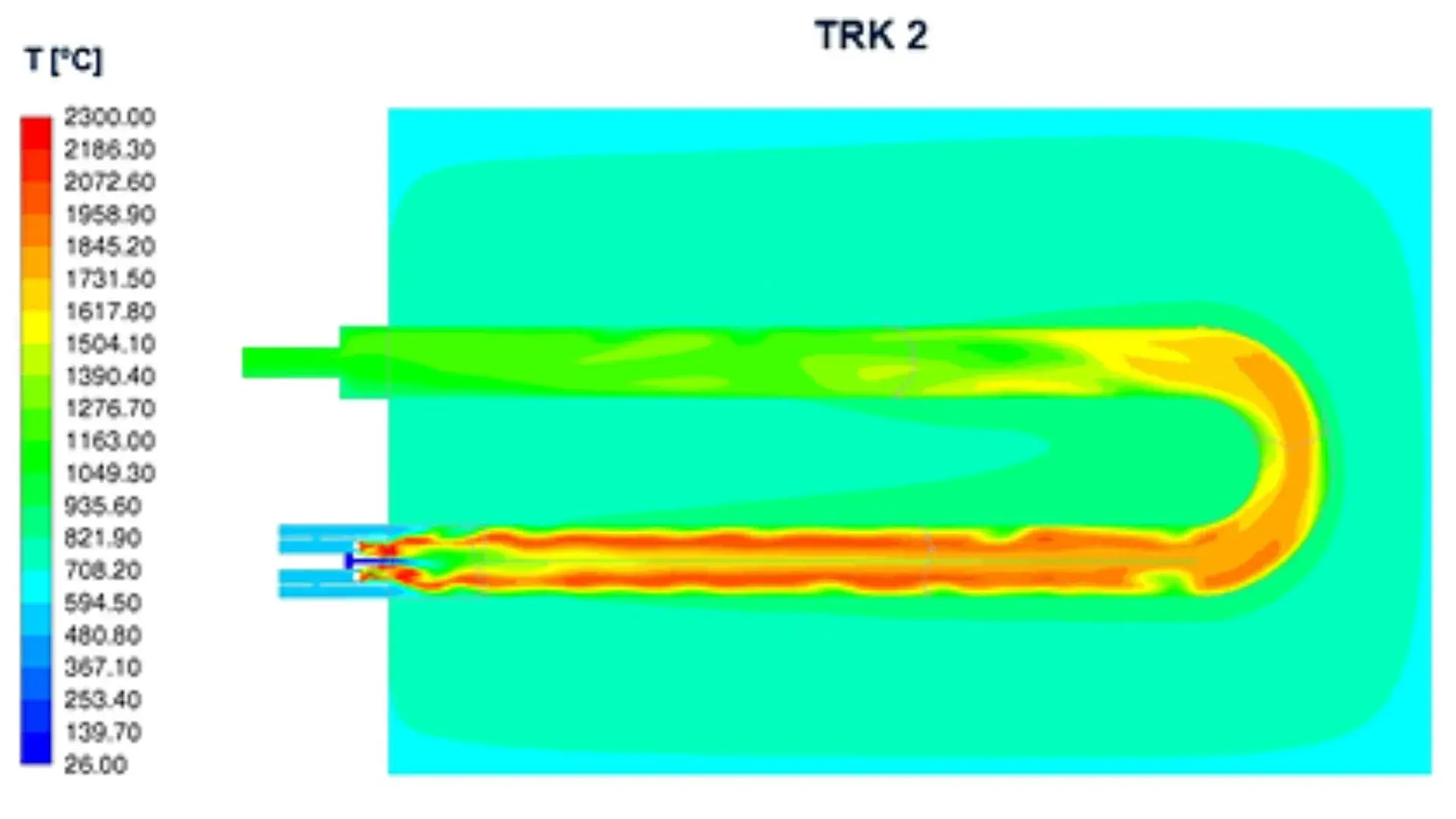
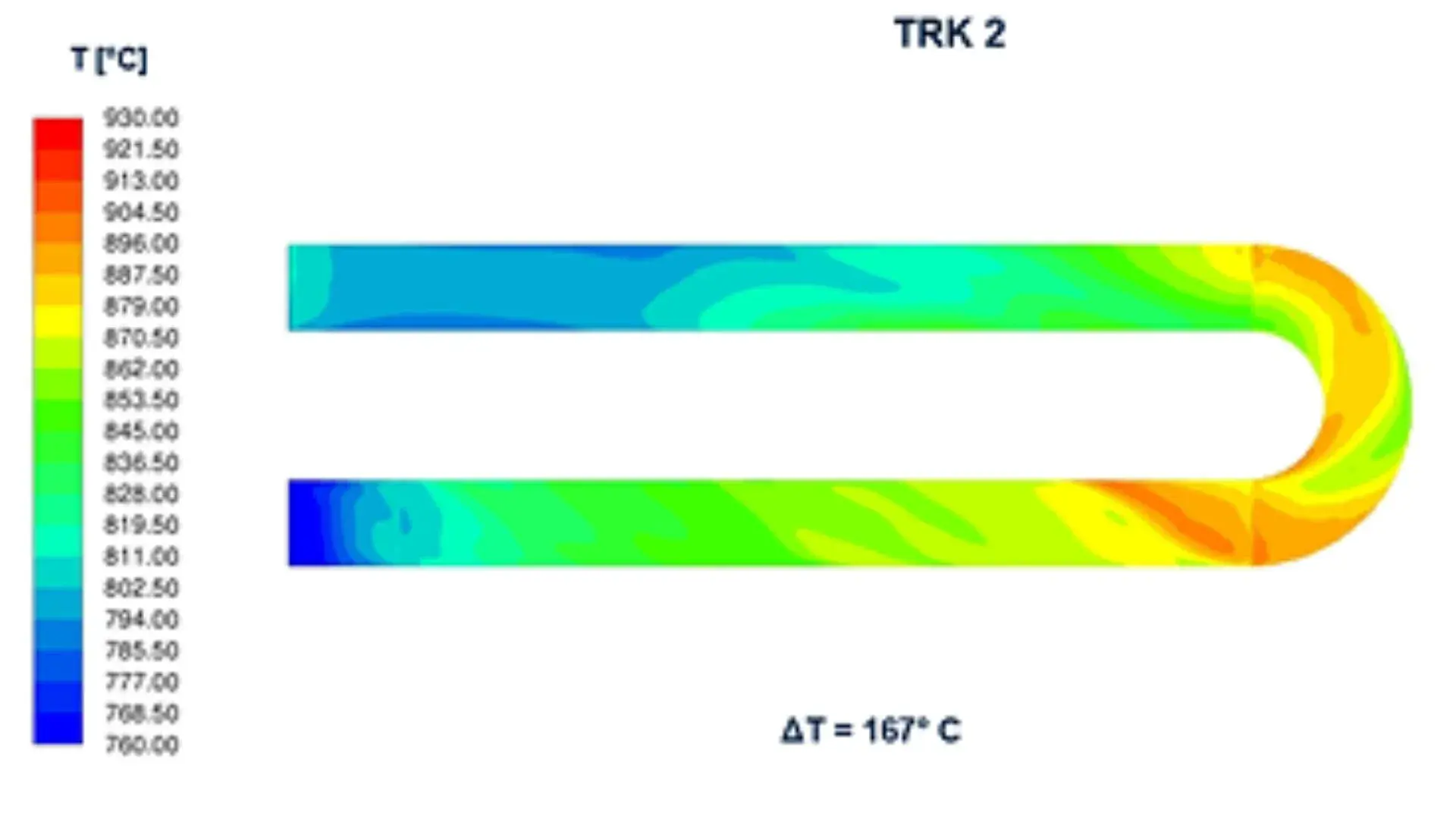
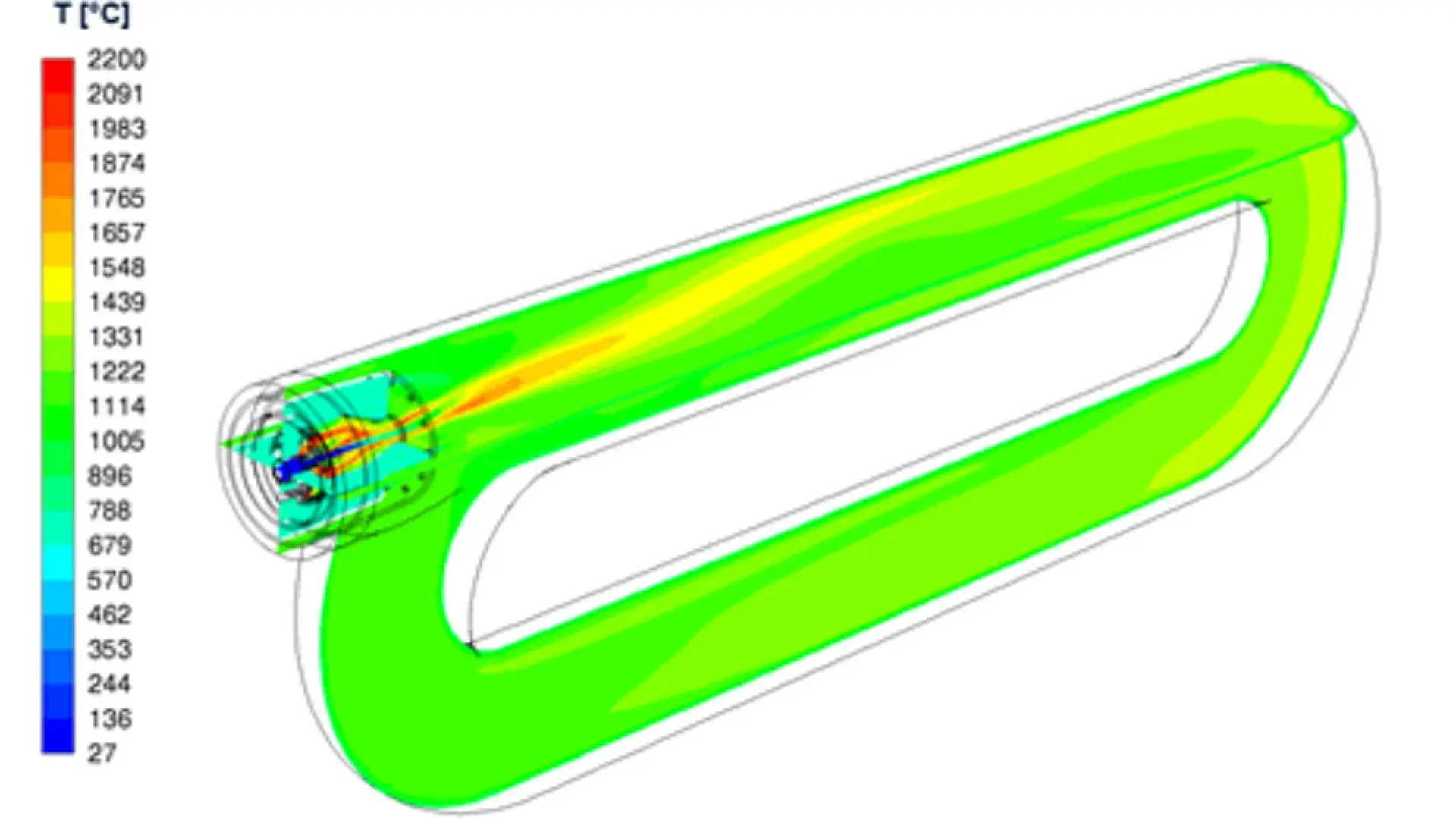
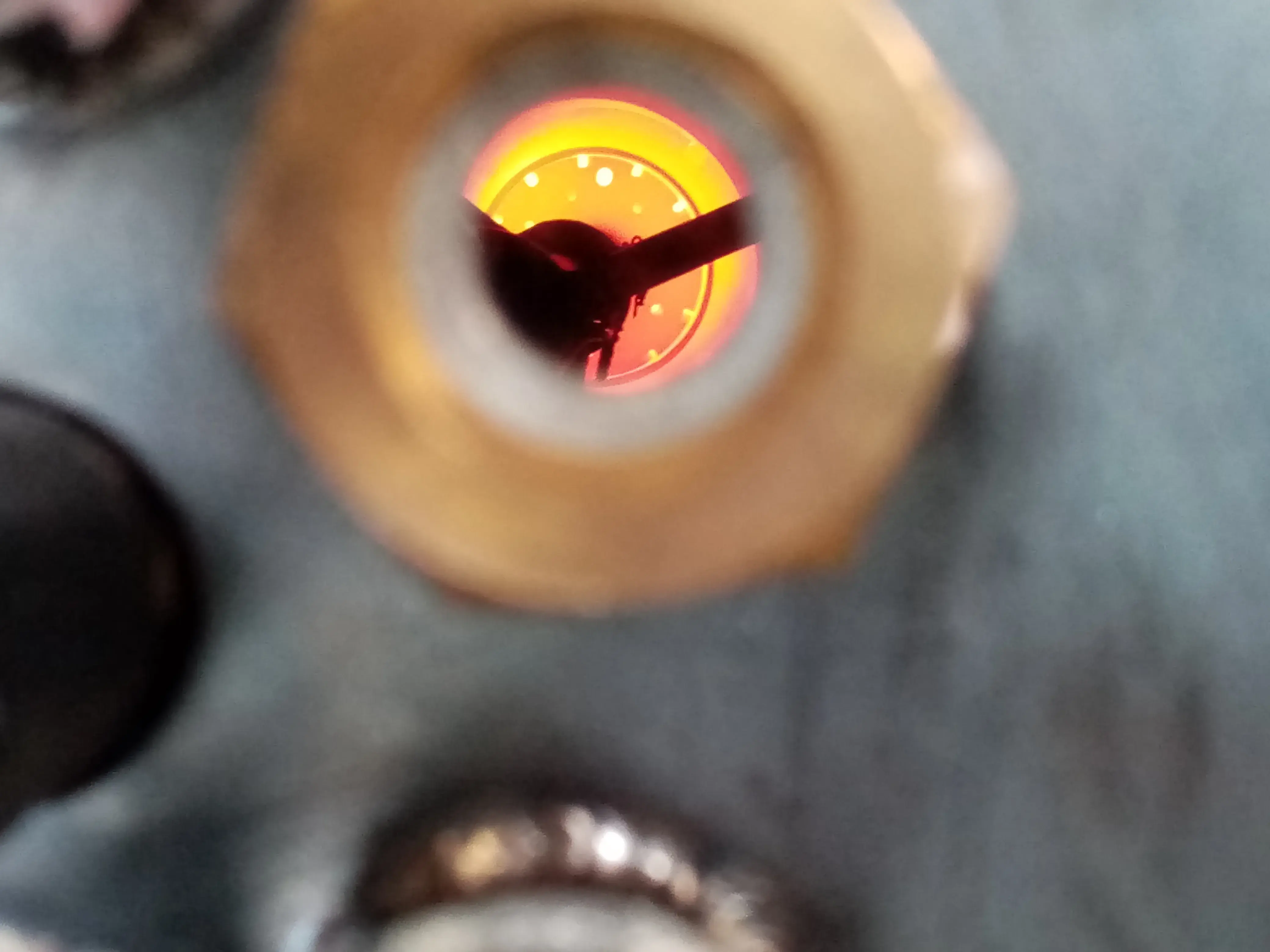
Flame mode allows to heat up furnaces, with a well developed and stably anchored flame easily detected by UV sensors.Flameless mode can be switched on when the furnace temperature is above the self-ignition temperature of the fuel.
Safety
Flame detection in flame mode via UV or other optical devices.
Flameless mode can be achieved only when furnace temperature is over self-ignition temperature of fuel in order to guarantee stable ignition of the air and fuel mixture.
Environment
- TRK (U- and W-shaped radiant tubes)
Furnace @ 800°C for Natural Gas - Burner load ≥ 80%:
230 mg/Nm3 @ 3% O2 - TRKS – metallic version (P, 2P and SER radiant tubes)
Furnace @ 800°C for Natural Gas - Burner load ≥ 80%
230 mg/Nm3 @ 3% O2 - TRKSX – metallic version (P, 2P and SER radiant tubes)
Furnace @ 800°C for Natural Gas - Burner load ≥ 80%:
90 mg/Nm3 @ 3% O2 - TRKSX – ceramic version (SER radiant tubes)
Furnace @ 1000°C for Natural Gas - Burner load ≥ 80%:
150 mg/Nm3 @ 3% O2
The reported value is the expected one. The guaranteed value will be defined case by case according to the furnace type and process operating conditions.