
Level 2 Strip Processing
A key part of a Strip Processing Line is Level 2.
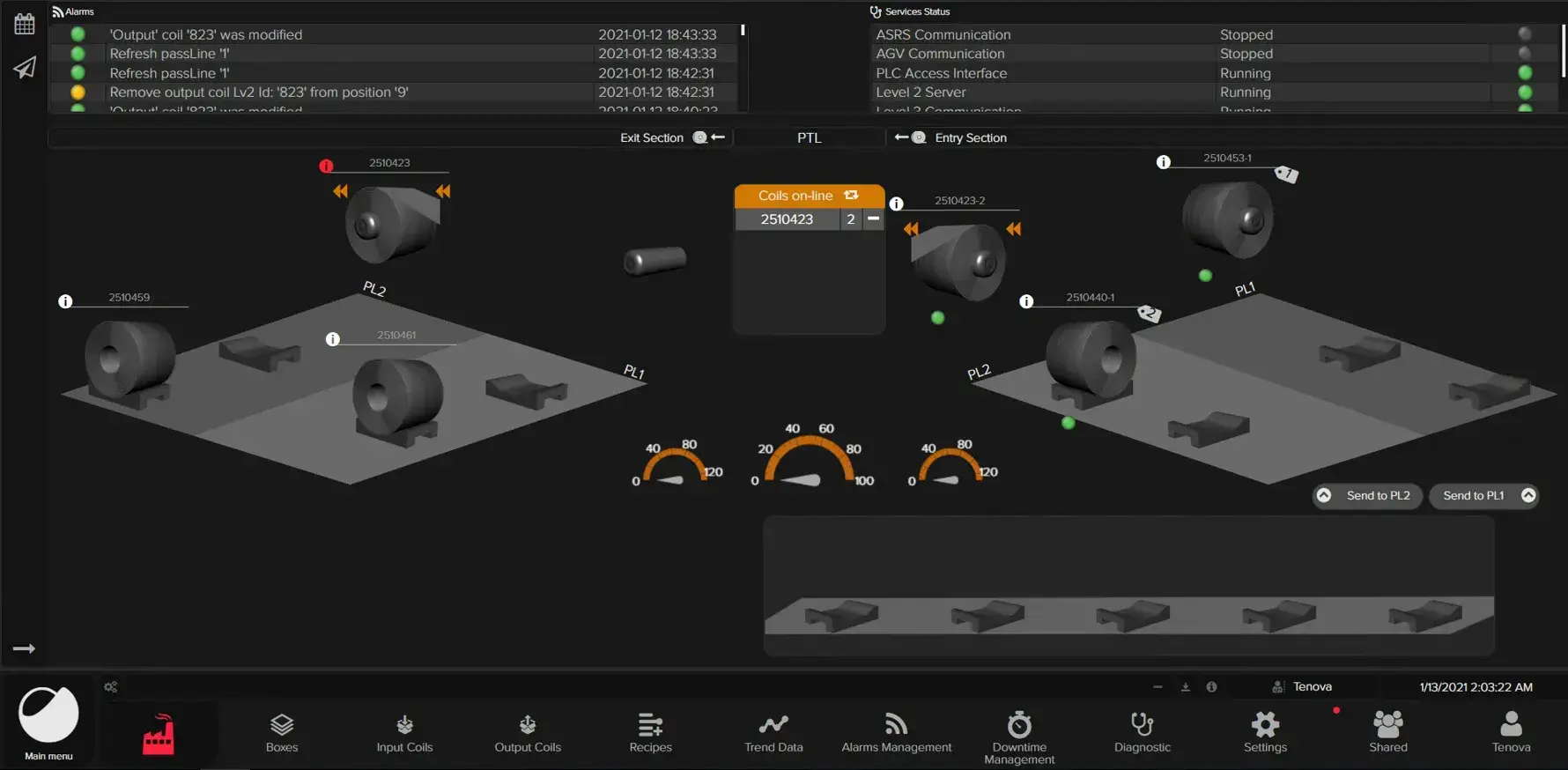
The Level 2 provided by Tenova tracks the entire coil production process, providing the technology to improve and optimize the process and product.
Overview
Tenova Level 2 controls the progress of the process and take action on it to guarantee its optimization and, consequently, an improvement of the final product.
The main features of Level 2 software are:
- Providing an overview of the plant through a modern user interface
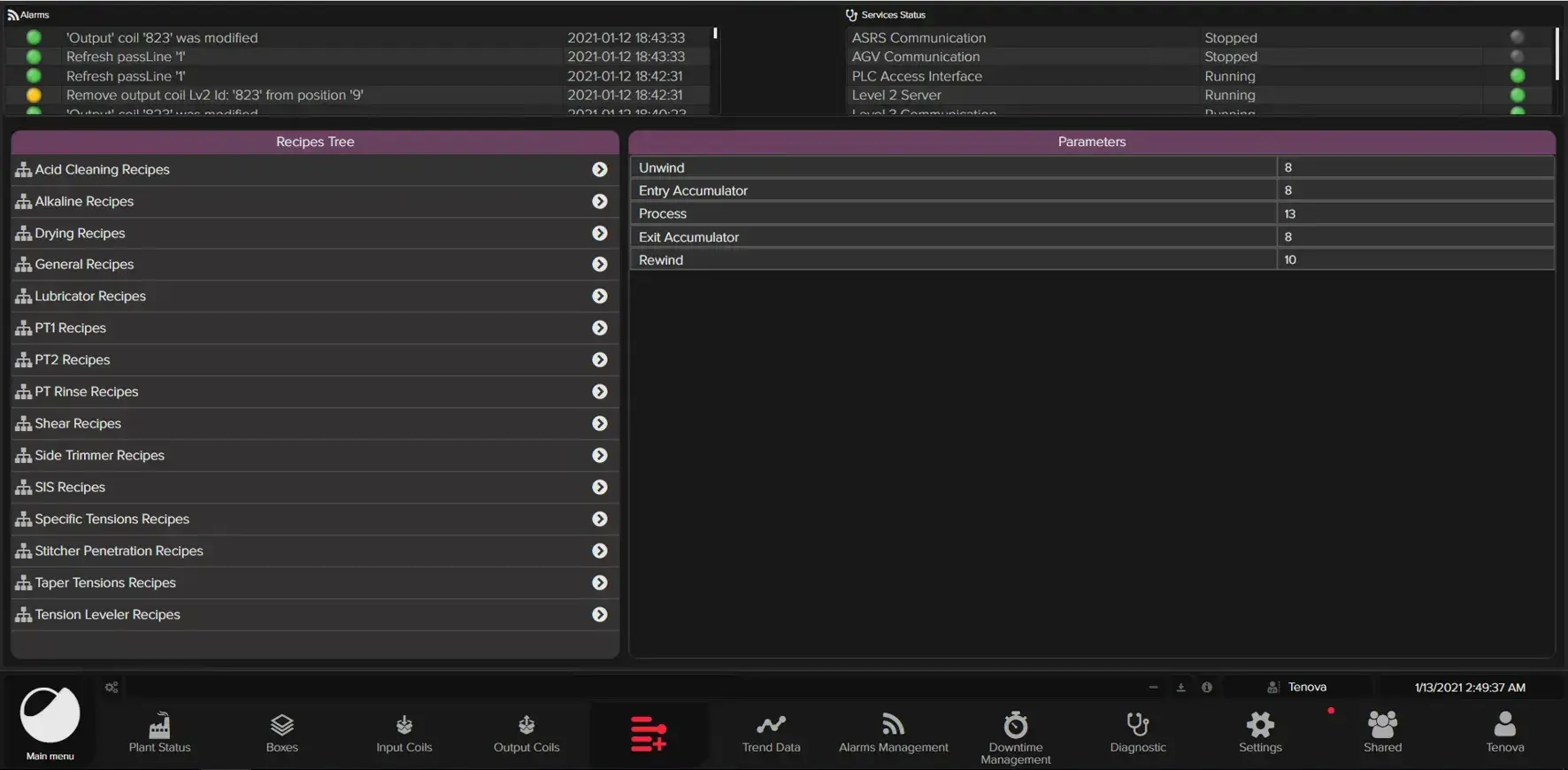
- Manage coil data and recipe values in order to obtain a quality product
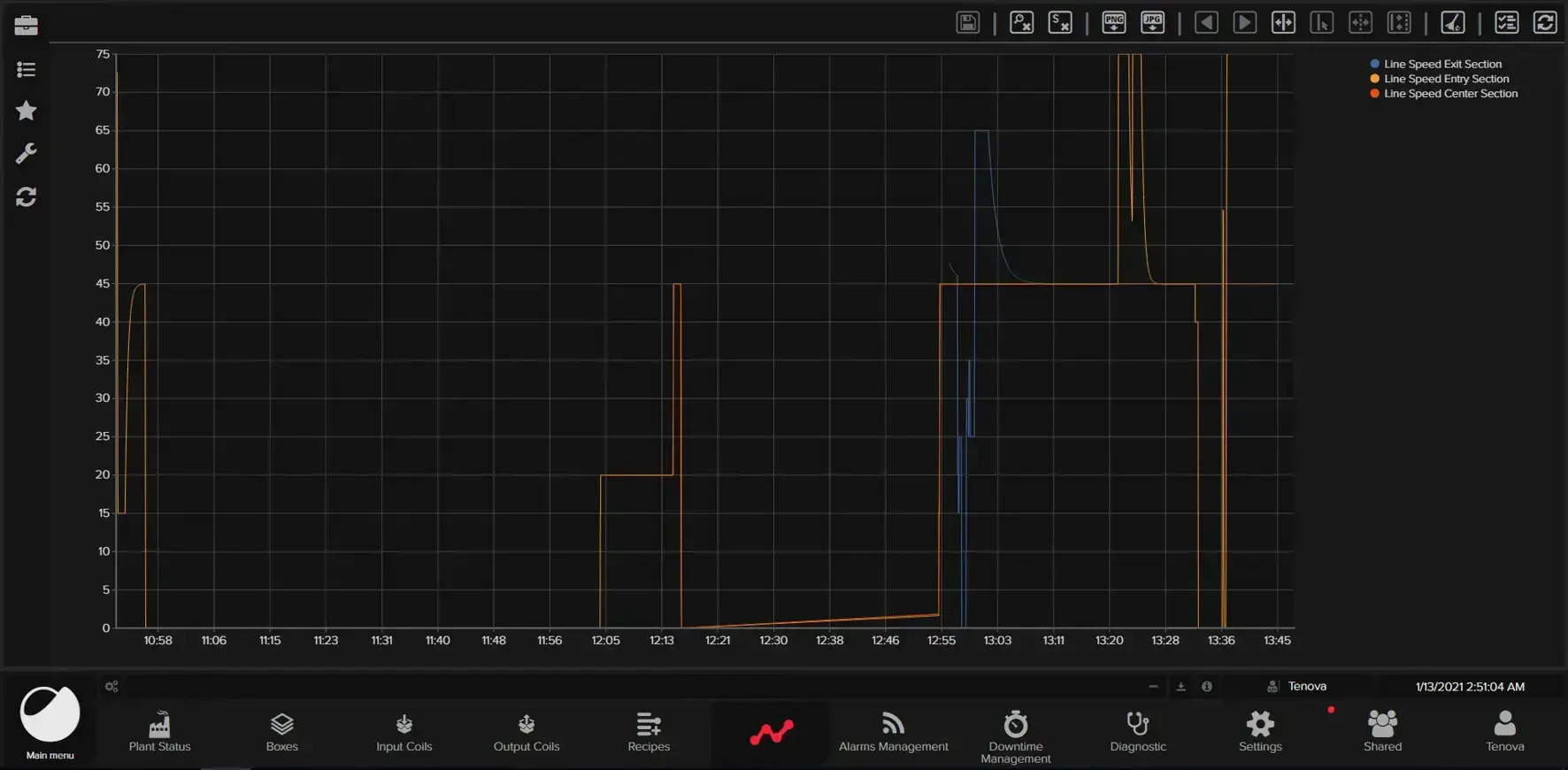
- Acquiring and recording measure feedbacks
- Tracks the coil process by mapping the input coils to the output coils.
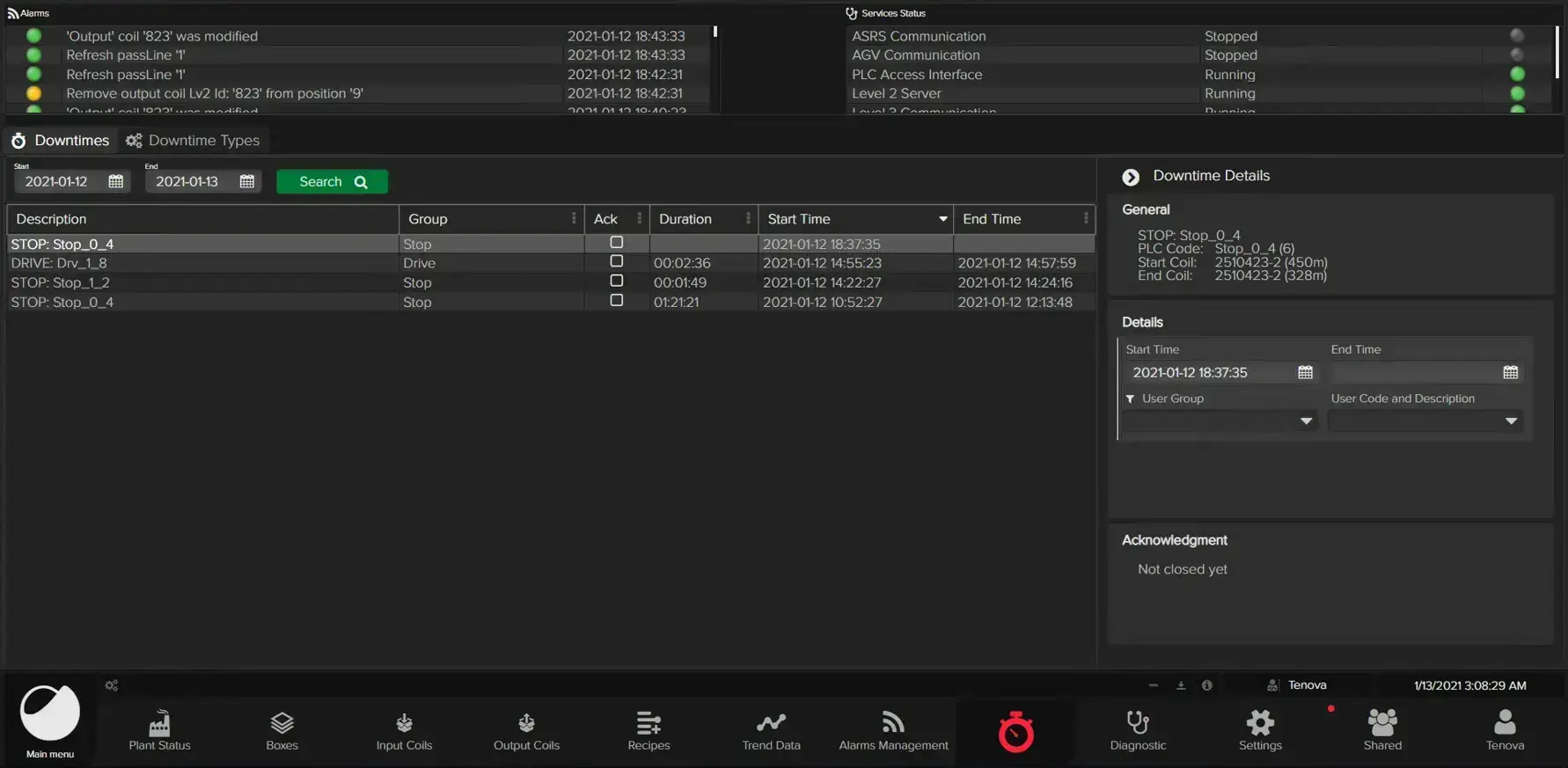
- Downtimes information
- Historic database of produced coils.
- Production, downtime and quality report
Technical data
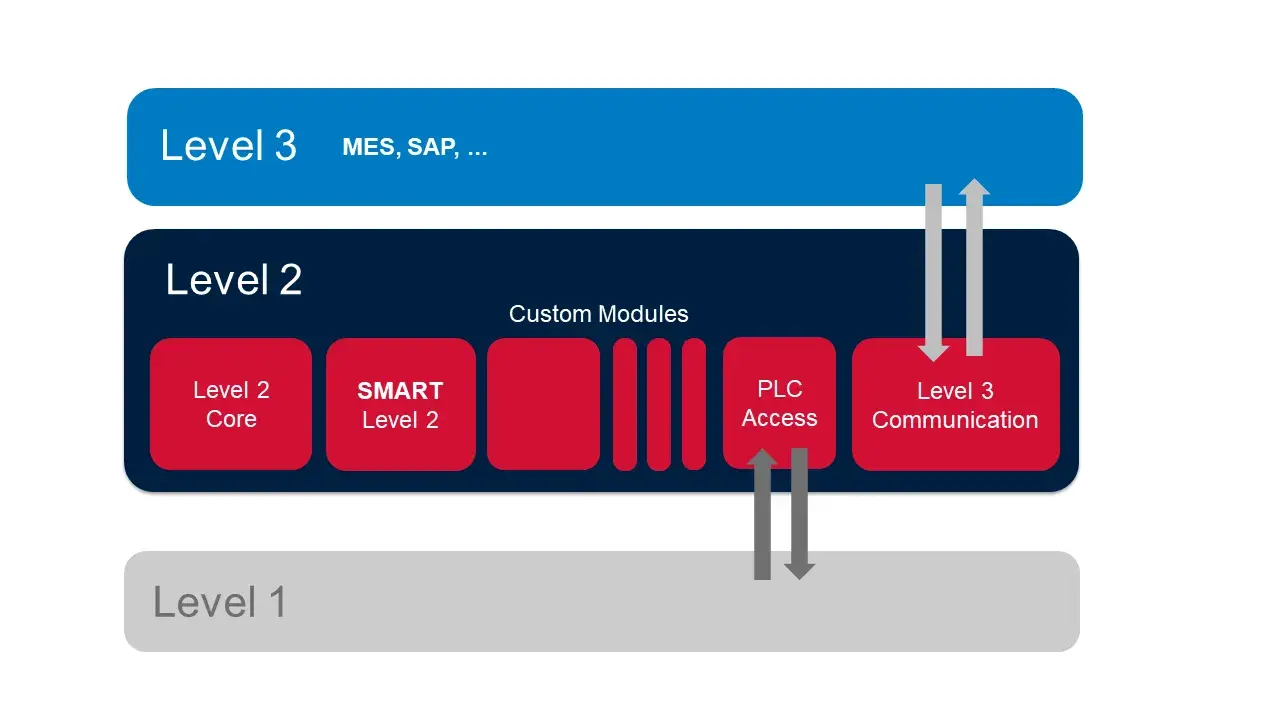
Tenova Level 2 integrates seamlessly with third party production scheduling layer supporting the most popular communication protocols.
In addition, thanks to the modularity of the product it can interface with external packages such as measurement or equipment systems in accordance with customer needs.
While the backend services run on the local Level 2 server, the innovative and intuitive user interface developed by Tenova can be reached from any browser in the plant, facilitating access from multiple locations and differentiating its contents according to the user (operator, technician, manager, ...).
Tenova's Level 2 technologies and features reduce maintenance costs, improve the quality, and make the data acquired from the plant usable at multiple levels.
Innovation
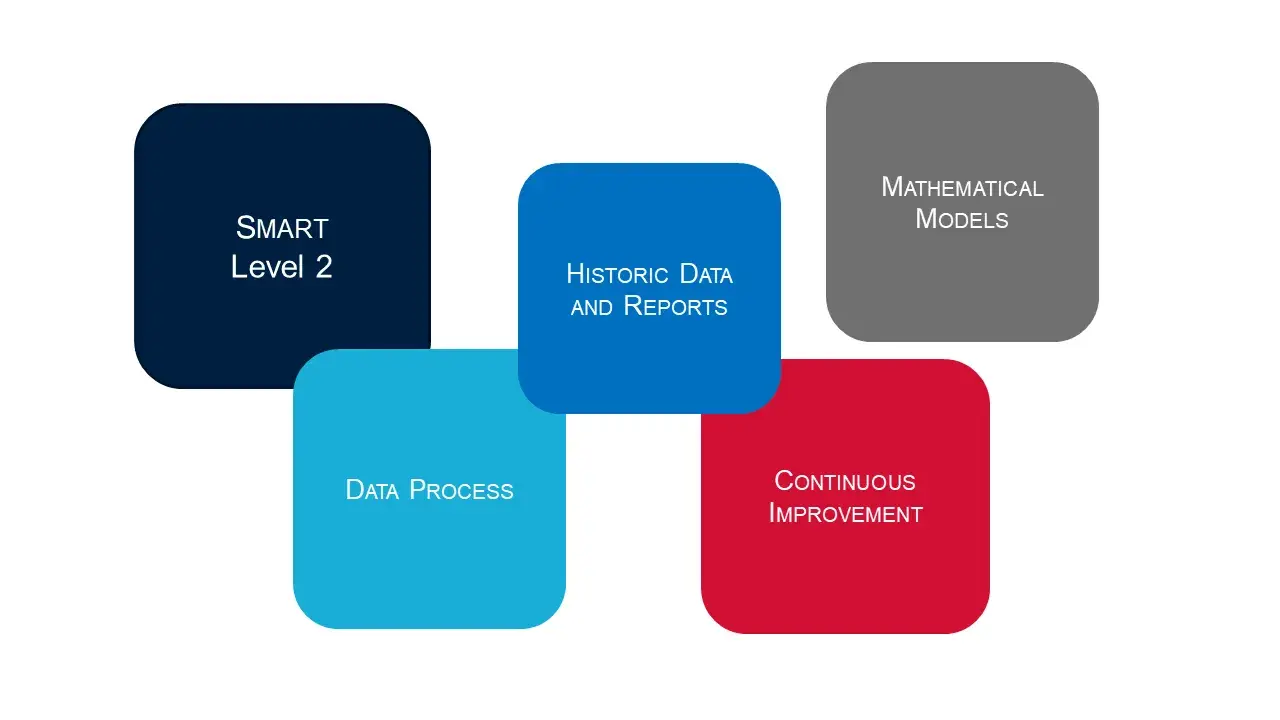
Tenova has improved its products by developing new solutions based on Industry 4.0 technology: this evolution has led to the creation of Smart Level 2.
This software retains all the functionality of a traditional Level 2 alongside new IoT-related features.
The Smart Level 2 system can provide innovative models and technologies to improve the setting of all relevant process parameters.
The process know-how stands behind the development of mathematical models and is of the essence for generating the proper constraints to the setup parameters.
Smart Level 2 can be trained by collecting data and benchmarking between different plants. In this way there is a continuous improvement of plant conditions and process quality.
Digital
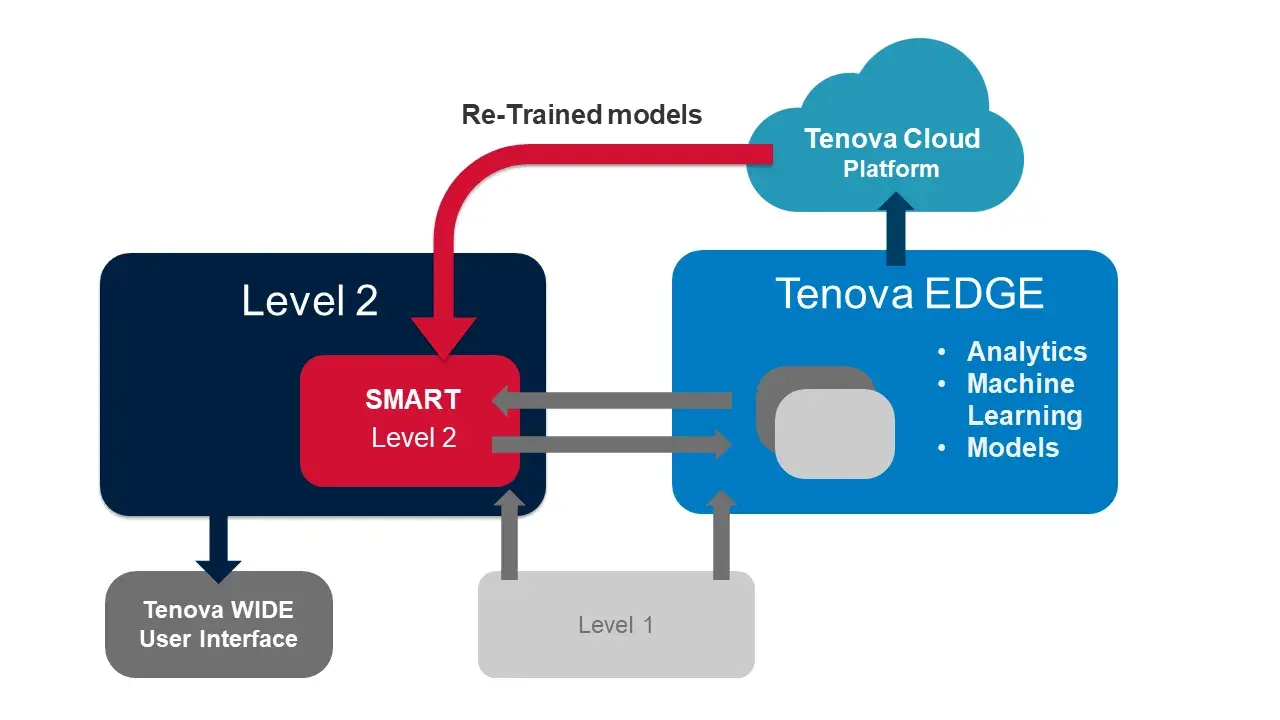
Tenova Level 2 can exchange data with the Tenova Edge when it is deployed in the plant.
This system allows Level 2 to be connected with the Tenova portal.
In this way, services provided by Tenova such as analytics, machine learning algorithms, and continuous model updates are made available in Level 2 to improve and optimize the process.
The graphical interface is based on Tenova WIDE delivering a unified user experience for the end user across multiple Tenova products.
Automation
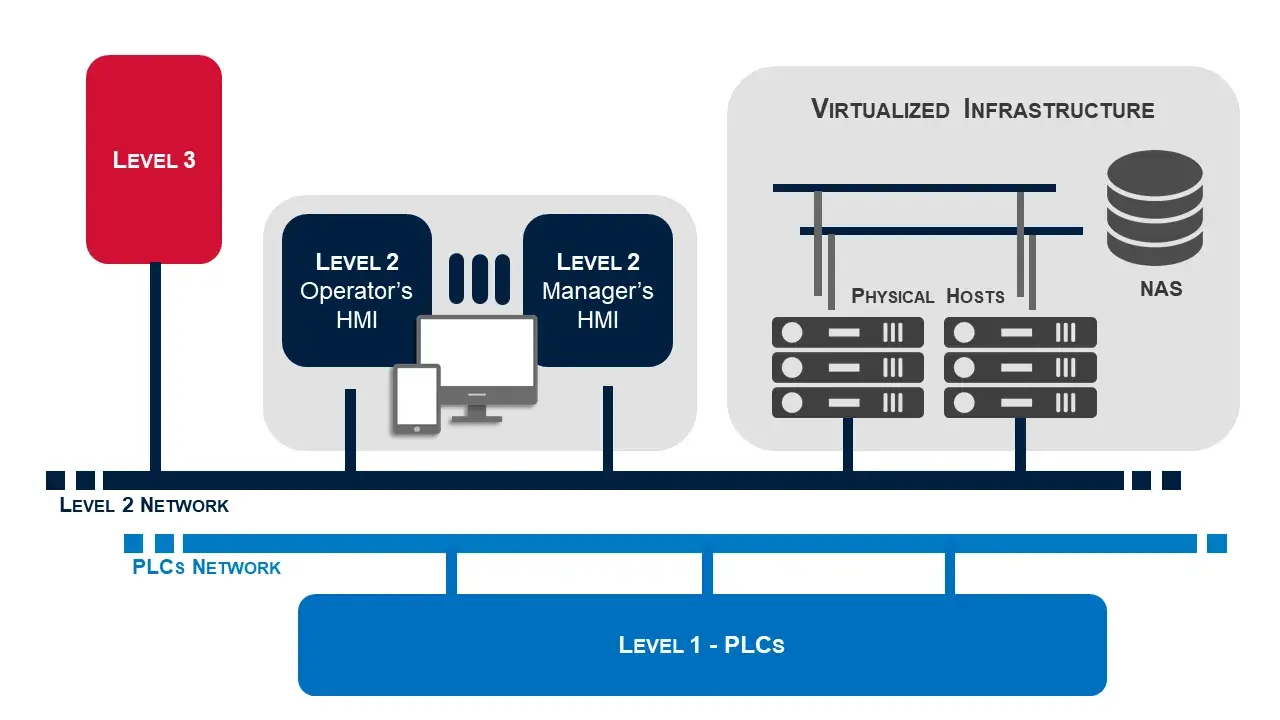
Layer 2 fully supports a deployment on virtual infrastructure where it is available on the plant floor. The backend services run in virtual machines (VMs) supporting efficient resource management. The virtual infrastructure ensures all security, redundancy and backup requirements avoiding massive downtimes and disruption.
The client/server architecture allows an unlimited number of operator’s and engineer’s HMI clients to connect to Tenova Level 2 server tasks without any disruption.
Level 2 can communicate via OPC protocol (including the newer OPC UA standard) to PLCs on the Level 2 network.
Similarly, communication with Level 3 or other in-plant systems can take place using different methodologies based on customer requirements.