
Optical Velocity Measurement (OVM)
The Optical Velocity Measurement (OVM) sensor is designed to continuously measure velocity of hot flowing off-gases with accuracy and repeatability. It can be used for any kind of hot gases and is not dependent on CO2 presence and is suitable for a variety of industrial plants with temperatures above 600oC
Overview
The Tenova Goodfellow Velocity sensor (OVM) System is designed to operate as a stand-alone product that utilizes IR emission from the hot gases. The hot off-gas transmits radiation in various wavelengths and two particular band of wavelengths which are always present in the near IR region are selected. The velocity analyzer sends the measurements to the Plant PLC in the form of 4-20mA signals via the plant network through an Ethernet connection.
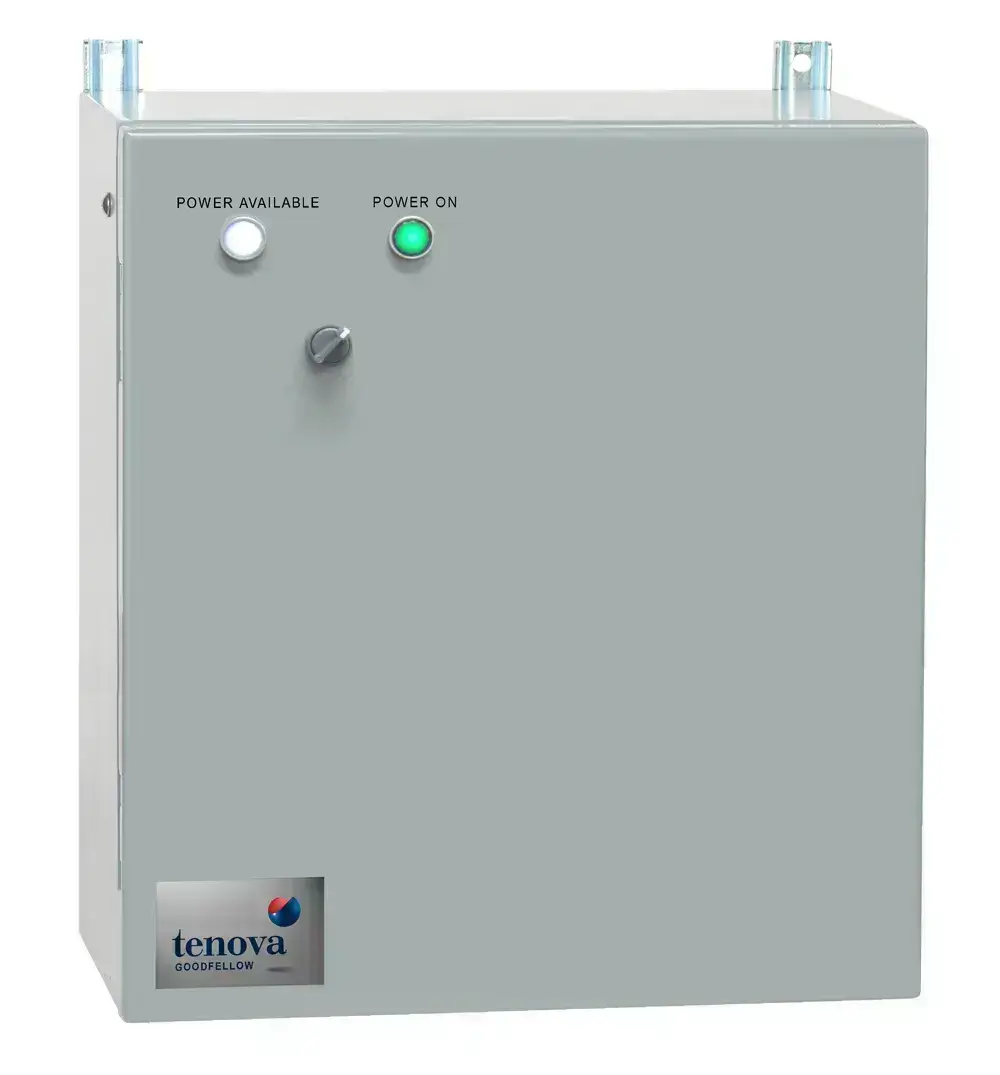
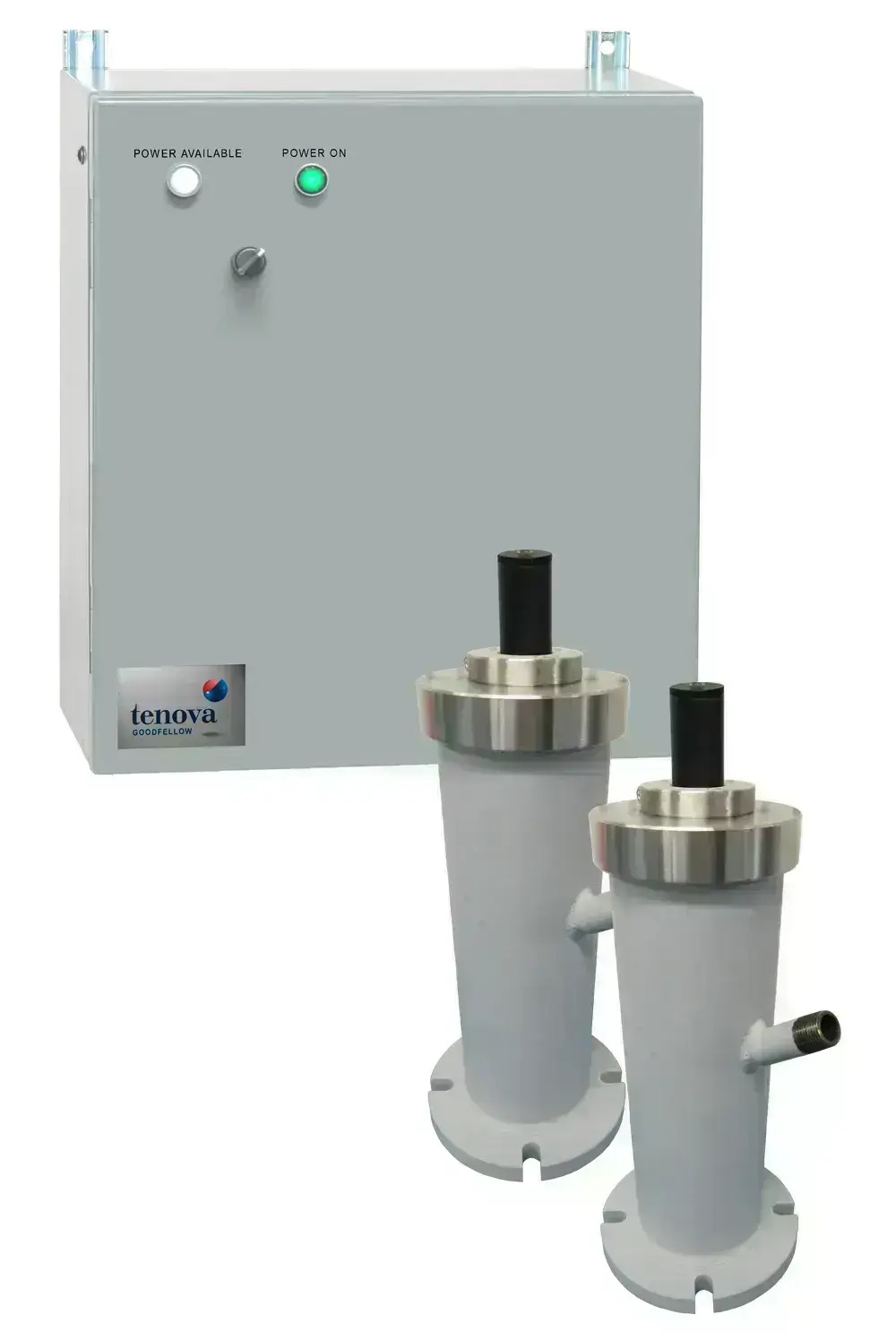
The essential component of the OVM includes two cabinets with photodiode sensors in each which are installed on the duct. One of the cabinets has a DAQ and processing card which accepts the signals from both the cabinets and performs the calculations for velocity and alarms. The second cabinet only hosts the PDA along with the sighting tube which collects the signal and is transmitted onto the first cabinet for velocity measurements.
Technical Data
The Optical Velocity sensor (OVM) is a rugged, stand alone, non-contact device, designed to measure velocities of off-gas in hostile environments. The velocity of a gas as it exists a process is vital information for many industrial applications. The presence of laminar flow is a requirement for this device. Turbulent flow introduces noise which effects the accuracy of the measurement.
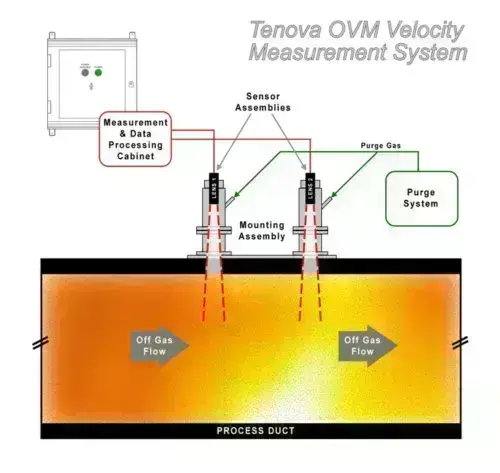
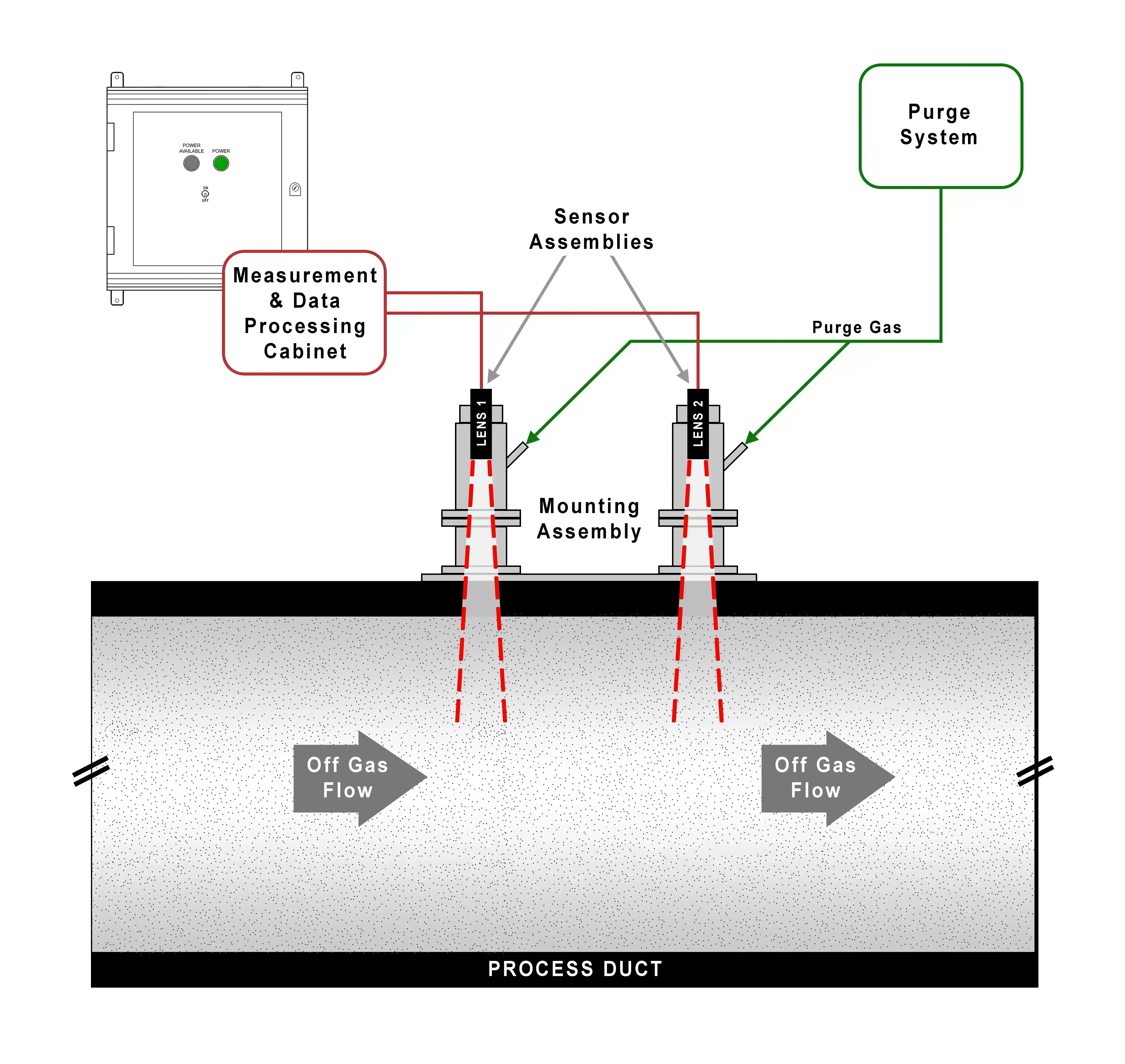
The Optical Measurement System uses light emitted by the furnace gas to measure velocity. As dust and hot gases flow past the upstream sight tube, light is collected by a lens and transferred by fiber to a cabinet. In the cabinet the light is converted into an electrical signal and recorded on a computer. The same dust and hot gases flow past the second sight tube producing a similar electrical signal.
The signals are cross correlated to determine the time of flight between the first and second sight tube. A velocity is calculated from the time of flight and passed to the plant control system. The system consists of an optical assembly mounted on the furnace duct, a purge box and a cabinet located away from the furnace duct.
Innovation
Tenova OVM is a rugged optical non-contact flow measurement system with very low maintenance. It can be used for any kind of hot gases and is not dependent on presence of any particular gases.
Environment
- Flue gas velocity data ensures that baghouse collects the emission gases properly.
- Dynamic control of steel making process.
- Control of emissions through the fume systems.
- Facilitate mass and energy balance in the conversion vessel
Digital
Flow data is sent to Tenova NextGen system for real-time precise process/operation monitoring and optimization.
Related Solutions